Health Tips
Simple Nutrition Habits for Better Health
Good nutrition does not require a special diet or expensive products. A handful of habits, applied most days, covers most of what the evidence actually supports.
Start with the shape of the plate
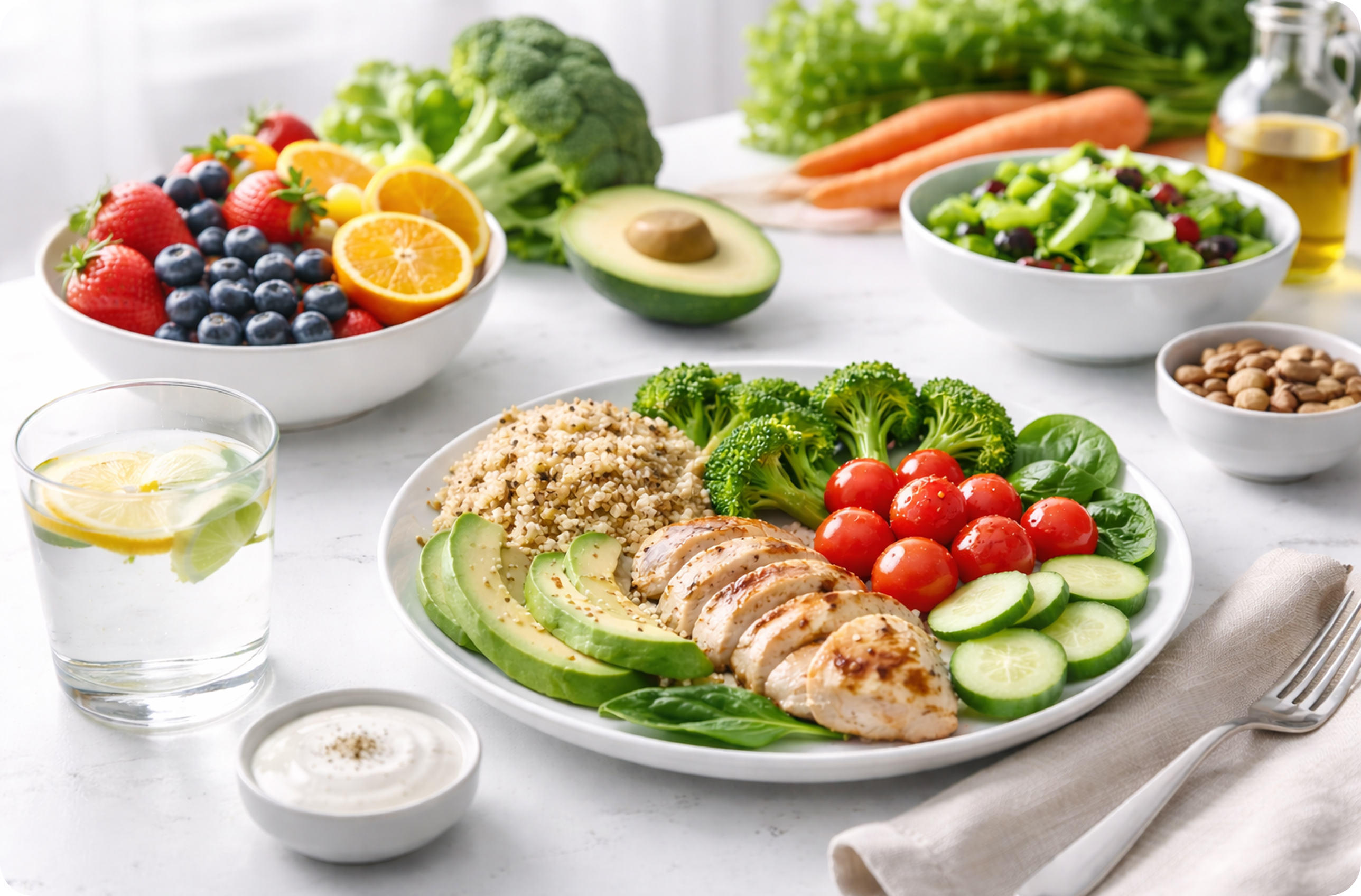
A practical way to build a meal without counting anything is to divide the plate: roughly half vegetables and fruit, a quarter protein such as fish, poultry, eggs, beans or lentils, and a quarter starchy food, ideally a whole grain.
This is a rule of thumb rather than a prescription, but it steers most meals towards more fibre and vegetables without needing to track portions.
Aim for at least 400g of fruit and vegetables a day
World Health Organization guidance is that everyone over 10 years of age should aim for at least 400 grams of fruit and vegetables per day, with smaller amounts for younger children. That is roughly five portions.
Frozen and tinned vegetables count, and are often cheaper and less prone to going to waste. Variety matters more than any single item.
Get enough fibre
WHO guidance for adults is at least 25 grams of naturally occurring dietary fibre a day. Whole grains, beans, lentils, nuts, fruit and vegetables are the practical sources.
If your current intake is low, increase it gradually and drink enough fluid alongside it, which makes the change considerably more comfortable.
Watch salt, sugar and fats
- Salt: adults should limit intake to less than 5 grams per day, equivalent to 2 grams of sodium.
- Free sugars: less than 10% of total daily energy intake, about 50g or roughly 12 level teaspoons for someone consuming about 2000 calories a day.
- Total fat: 30% or less of total daily energy intake may help prevent unhealthy weight gain.
- Saturated fat: no more than 10% of total energy intake, and no more than 1% from trans fats of any type.
Most salt and free sugar in a typical diet comes from packaged food and drinks rather than the salt shaker, so reading labels achieves more than changing what you add at the table.
Supplements are not a replacement for food
Supplements can help where there is a genuine deficiency or an increased need, which a doctor can identify. They are not a substitute for a reasonable diet, and more is not better.
Some supplements interact with prescription medicines. Bring a list of everything you take, including vitamins and herbal products, when you speak to a pharmacist.
General guidance has limits
When to get personalised advice
- You are pregnant or breastfeeding.
- You have diabetes, kidney disease, heart disease, or a condition affecting digestion.
- You have been told to follow a specific diet, or to limit a particular nutrient.
- You are losing or gaining weight without meaning to.
In these situations population-level targets may not apply to you. Speak to a doctor or a registered dietitian for advice matched to your circumstances.
Sources
This article is general information, not medical advice, and it cannot account for your own health, medicines or allergies. Always follow the instructions on your medicine packaging and consult a qualified pharmacist or doctor before starting, stopping or changing any treatment.